
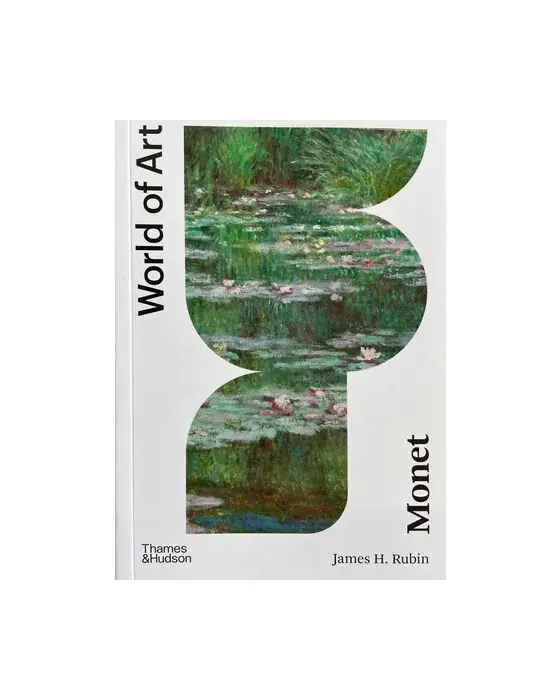
Claude Monet (18401926) is one of the most admired and famous painters of all time, and the architect of Impressionism: a revolution that gave birth to modern art. His techniquepainting out of doors, at the seashore or in the city streetswas as radically new as his subject matter, the landscapes and middle-class pastimes of a newly industrialized Paris. Painting with an unprecedented immediacy and authenticity, Monet claimed that his work was something new: both natural and true.In this new introductory study, James H. Rubinone of the worlds foremost specialists in 19th-century French arttraces the development of Monets practice, from his early work as a caricaturist to the late paintings of waterlilies and his garden at Giverny. Rubin explores the cultural currents that helped to shape Monets work: the utopian thought that gave rise to his politics; his interest in Japanese prints, gardening, and trends in the decorative arts; and his relationship with earlier French landscape painters as well as such contemporaries as Manet and Renoir.
Frakt og levering
Rask og pålitelig levering
Fri frakt over 788 kr