
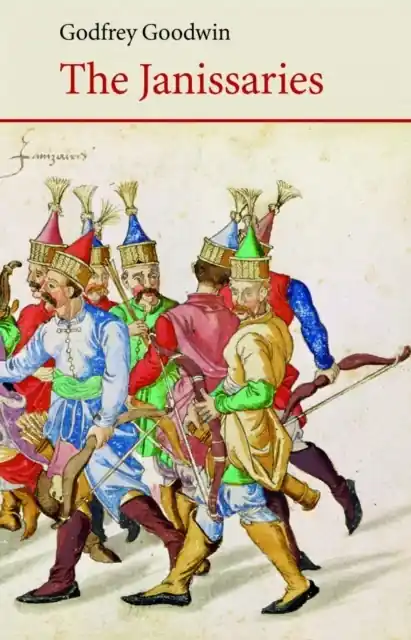
The story of extraordinary personalities in victory and defeat, this book begins by exploring the origins of the janissary corps with the selection of youths from Christian families in the Balkans, reviews the Ottoman armed forces followed by a survey of the victorious years – culminating in the conquest of Hungary.From the fifteenth to the sixteenth century, the janissaries were the scourge of Europe. With their martial music, their muskets and their drilled march, it seemed that no one could withstand them. Their loyalty to their corps was infinite as the Ottomans conquered the Balkans as far as the Danube, and Syria, Egypt and Iraq. They set up semi-independent states along the North African coast and even fought at sea. Their political power was such that even sultans trembled. Who were they? Why were they an elite? Why did they decline and what was their end? These are some of the questions, which this book attempts to answer. It is the story of extraordinary personalities in both victory and defeat. The book begins by exploring the origins of the janissary corps with the careful selection of youths from Christian families in the Balkans. It then introduces the pillars of the Ottoman state, which these recruits were to serve. The Ottoman armed forces are reviewed, followed by a panoramic survey of the victorious years of this elite corps – culminating in the glorious conquest of Hungary and the establishment of the Danube frontier.; By the middle of the sixteenth century discipline among the janissaries had declined, but the real fault lay with the sultan and his ministers. The devirme (levy) system of recruitment faltered and the corps became a refuge for society’s misfits. By the end of the eighteenth century the janissaries were more interested in trade than in war. Ill-disciplined and arrogant, they turned both rulers and the ruled against them. Yet their political power was such that it took years of patient and careful planning be
Frakt og levering
Rask og pålitelig levering
Fri frakt over 788 kr